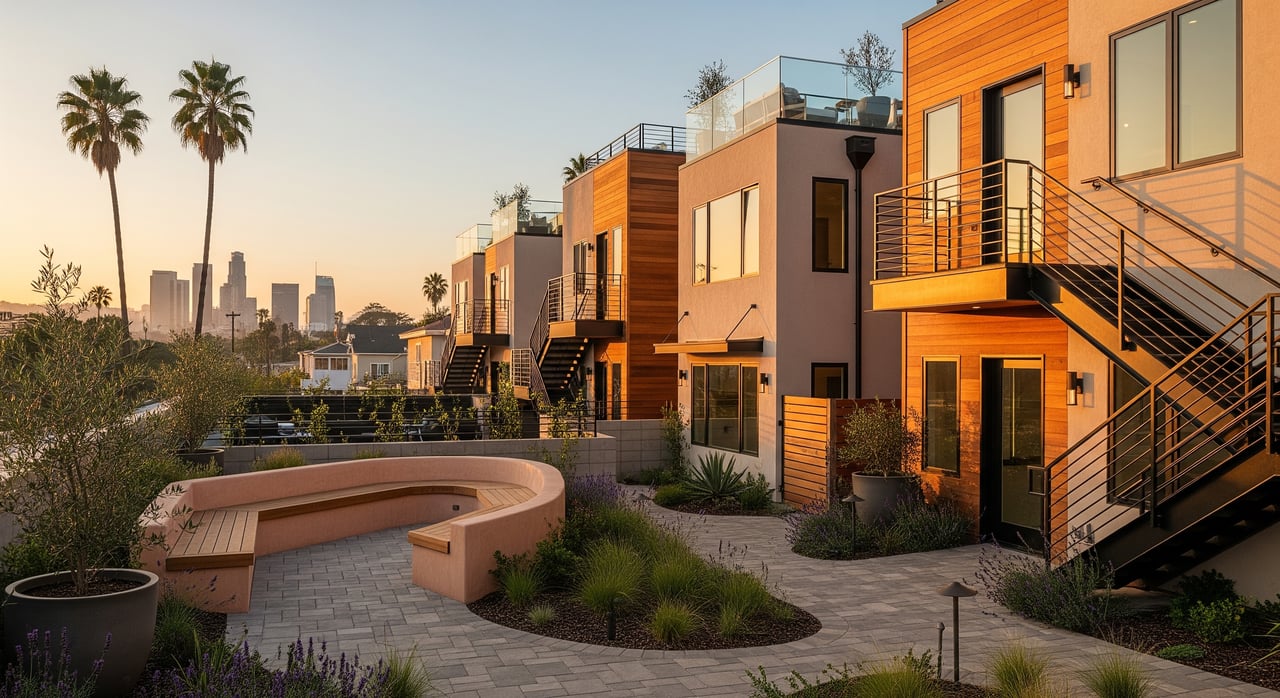
Thinking about rehabbing a small apartment building in Los Angeles to boost rents and long‑term value? The math can be compelling, but LA’s unique mix of rent rules, permitting, and seismic requirements means your ROI depends on getting the local details right. You want a clear, repeatable way to price the work, forecast income, and translate improvements into value. This guide gives you that framework, with LA‑specific checkpoints and steps you can use on your next deal. Let’s dive in.
Why LA rehab ROI is different
Los Angeles is one of the most expensive and competitive rental markets in the country, with high land and replacement costs and strong renter demand. As a result, cap rates for small multifamily assets often run lower than in many smaller markets. That creates tight spreads and a premium on accurate underwriting.
Your returns can vary more by neighborhood than by minor changes in scope. Start with local rent and sales comps for your specific submarket, not citywide averages. Use current rent data for renovated and unrenovated units, such as the monthly Los Angeles rent reports, and pair that with recent multifamily market research from major brokerages like CBRE’s research hub to set realistic ARV and cap rate assumptions.
Know your rules first
Before you price fixtures or finishes, confirm how LA’s rent and construction rules apply to your building.
- Rent stabilization and tenant protections. Many multifamily buildings built before October 1978 in the City of Los Angeles fall under the city’s Rent Stabilization Ordinance, which limits allowable annual rent increases and sets just‑cause eviction rules. Review the City’s resources on rent stabilization and tenant protections through HCIDLA.
- Statewide protections. California’s Tenant Protection Act (AB 1482) caps annual rent increases for many 1–4 unit rentals and requires just‑cause in many cases, with exemptions and complexities. Read the legislative summary for AB 1482.
- Permits and inspections. Most interior and exterior work requires permits and inspections by the Los Angeles Department of Building and Safety. Account for permit fees, plan check time, and inspections in your schedule and holding costs. Start with LADBS.
- Seismic retrofit and soft‑story. Certain wood‑frame buildings with tuck‑under parking are subject to mandatory seismic retrofits. If your property is covered, seismic work will materially affect cost and timeline. LADBS is your entry point for retrofit program details.
- Hazardous materials. Properties built before 1978 may involve lead‑based paint disclosure and abatement, and older buildings may include asbestos. Budget for testing and potential abatement in older assets.
- Tenant relocation. If a unit must be offline for an extended period, plan for lost rent and potential relocation assistance under local rules.
- Property taxes. Factor property tax changes if a transfer triggers reassessment, then carry the new tax bill into your pro forma. Review rules via the Los Angeles County Assessor.
Build a realistic rehab budget
Cover every cost bucket that touches the project. Skipping soft costs or carry is how budgets break.
- Soft costs: permits, design and engineering, plan checking, insurance requirements, lender fees, and municipal fees.
- Hard costs: demolition, structural work, roofing, windows, electrical, plumbing, HVAC, insulation, drywall, kitchens and baths, flooring, paint, exterior work, and landscaping.
- Specialty: seismic retrofits, ADA or fire life‑safety upgrades, lead and asbestos abatement.
- Operational and holding: property taxes, insurance, utilities during construction, property management, marketing for lease‑up.
- Contingency: 10 to 20 percent of hard costs, higher if building condition is uncertain.
Estimated per‑unit ranges in the Los Angeles MSA
- Cosmetic refresh, paint, flooring, appliances, minor fixtures: roughly 8,000 to 25,000 dollars per unit.
- Mid‑level rehab, kitchen and bath upgrades, new appliances, flooring, some systems like HVAC mini‑splits: roughly 25,000 to 75,000 dollars per unit.
- Full gut rehab, new layout, full mechanical replacement, structural or seismic work: 75,000 to 250,000 plus dollars per unit depending on building complexity and seismic scope.
Use local estimating data and multiple bids to tighten these ranges. RSMeans provides localized construction pricing that can ground your estimates in current costs. See RSMeans by Gordian. For perspective on typical remodeling cost and value recapture at a project level, review Cost vs. Value benchmarks, then adjust for LA’s higher labor and materials pricing.
Timeline and holding costs
Plan for permits and inspections to add weeks or months. A mid‑level unit‑level renovation often takes 8 to 16 weeks per unit if done sequentially. Working units in parallel can compress the calendar but requires tighter trade coordination and may raise labor costs.
Include 3 to 6 months of carrying costs for major rehabs, plus a cushion. Holding costs include taxes, insurance, interest carry, utilities, and any management oversight. If work occurs in occupied units, add time and cost for tenant coordination.
Model value and returns the LA way
Ground your valuation in income and comps, then stress test it. Use these core metrics:
- After‑Repair Value, ARV. Market value after renovation based on renovated comps and the income approach.
- Net Operating Income, NOI. Effective gross income minus operating expenses and reserves, before debt service.
- Cap rate. NOI divided by value. Apply a submarket cap rate for small multifamily, not a citywide average.
- Cash‑on‑cash return. Annual pre‑tax cash flow after debt service divided by total cash invested.
- Return on cost, rehab ROI. Increase in value attributable to rehab minus rehab cost, divided by rehab cost.
How rent increases translate into value
- Value uplift equals increase in annual NOI divided by exit cap rate. If NOI rises by 12,000 dollars per year and the exit cap rate is 5 percent, value uplift is 240,000 dollars.
A simple, illustrative example
Assume a 4‑unit building in a Los Angeles submarket.
- Current rents: 1,400 dollars per unit, 5,600 dollars per month gross.
- Post‑rehab rents: 2,000 dollars per unit, 8,000 dollars per month gross.
- Vacancy and credit loss: 5 percent of gross.
- Operating expenses: 40 percent of effective gross income.
- Purchase price: 900,000 dollars.
- Rehab budget: 120,000 dollars total, 30,000 dollars per unit mid‑level.
Step 1, stabilized NOI after rehab
- Effective gross income equals 8,000 times 12 times 0.95 equals 91,200 dollars.
- Operating expenses equals 0.40 times 91,200 equals 36,480 dollars.
- NOI equals 91,200 minus 36,480 equals 54,720 dollars.
Step 2, ARV via cap rate
- Assume a market cap rate of 4.5 percent for this submarket.
- ARV equals 54,720 divided by 0.045 equals 1,216,000 dollars.
Step 3, value increase attributable to the rehab
- 1,216,000 minus 900,000 equals 316,000 dollars.
Step 4, simple return on rehab dollars
- 316,000 minus 120,000, divided by 120,000, is about 163 percent.
This quick view does not include transaction costs, financing interest carry, sales costs, or taxes. For a full investor model, add debt service, reserves, and exit assumptions to compute cash‑on‑cash and IRR.
Your step‑by‑step ROI worksheet
- Confirm rent control status and legal rent path for each unit.
- Build unit‑level rent pro formas for pre‑ and post‑rehab, and estimate vacancy.
- Price soft, hard, specialty, and holding costs, then add a 10 to 20 percent contingency.
- Estimate stabilized NOI and apply a submarket cap rate to derive ARV.
- Calculate value uplift, then return on cost using the formulas above.
- Run base, downside, and upside cases by flexing cap rate, rent uplift, and rehab overruns.
Financing that can improve ROI
Financing affects both your total cost and your time to stabilization.
- FHA 203(k) for 1 to 4 units. For owner‑occupied small multifamily, the FHA 203(k) program can finance purchase plus renovation under FHA rules.
- Construction and rehab loans. Bridge or construction loans can fund larger scopes and speed execution, with interest carry and reserves for draws priced into the deal.
- Private or portfolio lenders. Some lenders will underwrite to after‑repair income and may fund quickly, often at higher rates and with reserve requirements.
An integrated broker‑lender partner can compress timelines by pairing acquisition strategy with funding. That reduces handoffs and keeps underwriting aligned with your scope and exit plan.
LA‑focused due diligence checklist
- Verify rent control status for each unit through city resources and lease review.
- Confirm any mandatory seismic retrofit obligations for soft‑story or other building types.
- Pull title, order a property condition assessment, and consider a Phase I environmental if there is any site history risk.
- Get three bids per major trade and one general contractor bid to coordinate scope.
- Collect renovated rent comps and small multifamily sales comps within the same submarket.
- Price permits and plan check through LADBS and add realistic time to your schedule.
- Budget 10 to 20 percent contingency and 3 to 6 months of carry.
- Model downside scenarios with higher cap rates, higher costs, and slower lease‑up.
Sensitivity analysis that protects your downside
Your pro forma should include three levers that move value the most in LA.
- Exit cap rate. Model plus or minus 0.5 to 1 percent to see how values shift.
- Rehab cost overruns. Model plus 10 to 25 percent to protect against unknowns in older buildings and any specialty work.
- Rent uplift. Use low, base, and high cases based on renovated comps and property manager feedback.
When you see where the pro forma breaks, you can structure the deal and financing to survive that scenario.
Bring it all together
Estimating rehab ROI in Los Angeles starts with the rules, then the rents, then the scope. Price the full project including permits, seismic, and carry, translate rent gains into NOI, and use a realistic submarket cap rate to value the upside. Finally, test the model against tougher scenarios so your plan works in real life, not just on paper.
If you want a senior team to help you price scope, validate caps and comps, and line up capital quickly, connect with The Arch Corporation. Our integrated brokerage and private‑lending platform helps investors close faster, cut friction, and keep projects on schedule.
FAQs
How much rent uplift can LA unit renovations deliver?
- It varies by neighborhood and scope. Cosmetic updates might move rents 5 to 10 percent, while full interior upgrades often reach 10 to 25 percent or more. Always validate with local renovated comps.
Do I need vacant units to complete a rehab in Los Angeles?
- Not always. Occupied rehabs reduce carrying costs but add time and complexity. Larger scopes and rent control realities often favor vacancy and staged renovations.
How do LA rent rules affect ARV on a small multifamily rehab?
- Under rent control or AB 1482, model legally achievable rents for each unit and use those numbers for NOI and ARV. Reference city guidance through HCIDLA and apply just‑cause and increase limits correctly.
What contingency should I include in a Los Angeles rehab budget?
- Plan on 10 to 20 percent of hard costs. Use the higher end, 15 to 25 percent, for older buildings or when hazardous materials and unknown conditions are likely.
What should I include for timeline and holding costs in LA?
- For mid‑level scope, plan 8 to 16 weeks per unit if done sequentially and include 3 to 6 months of carry for taxes, insurance, interest, and utilities. Add time for permits and inspections.